
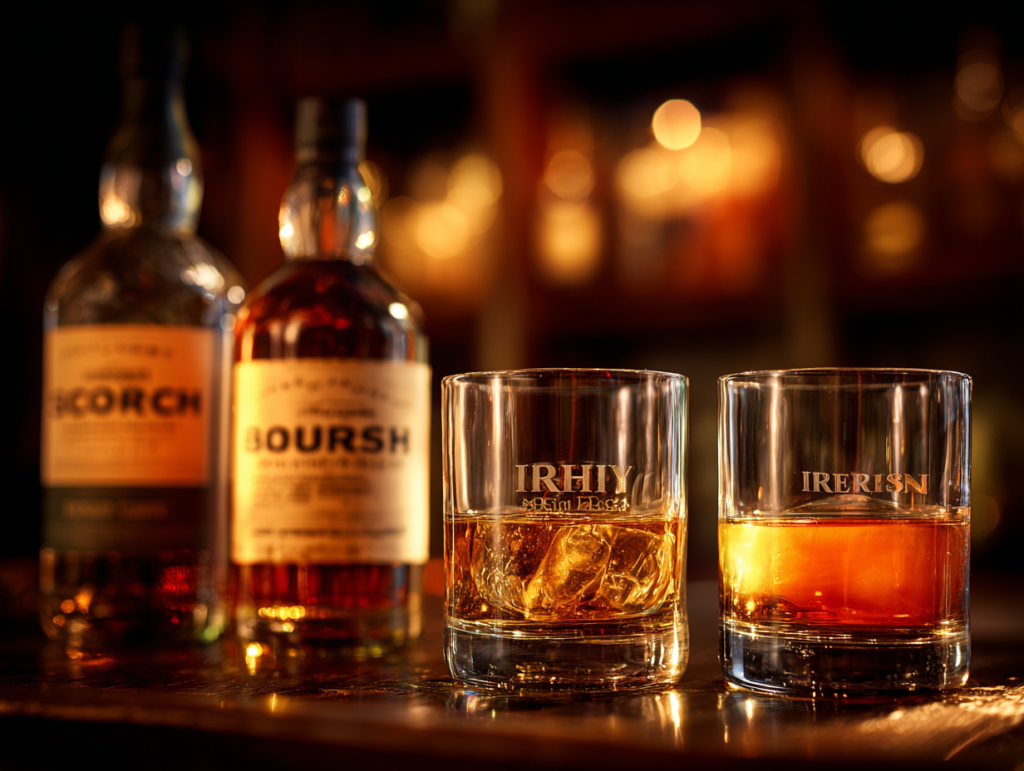
Scotch vs Bourbon vs Irish: Key Differences Explained When it comes to whiskey, few debates are as classic as Scotch vs Bourbon vs Irish whiskey. Each has its loyal fans, distinct flavor profile, and unique heritage — but what truly sets them apart? Understanding these differences not only helps you choose the right bottle for your taste but also deepens your appreciation of this timeless spirit.
At its core, whiskey (or whisky, depending on where it’s made) is distilled from grains like barley, corn, rye, or wheat. Yet, the country of origin, production process, and aging methods make each style taste remarkably different. Let’s break down the characteristics of Scotch, Bourbon, and Irish whiskey to help you sip smarter
.
Table of Contents
What Makes Scotch, Bourbon, and Irish Whiskey Unique
All three are whisk(e)y, but geography and technique are what define their character.
Scotch Whisky
Produced exclusively in Scotland, Scotch must be made primarily from malted barley and aged for at least three years in oak casks. It’s known for its smoky, earthy flavor — often a result of using peat-smoked malt during production.
- Flavor notes: Smoke, oak, spice, and hints of dried fruit.
- Popular regions: Speyside (smooth and sweet), Islay (smoky and peaty), Highlands (balanced and rich).
- Famous brands: Glenfiddich, Macallan, Laphroaig, Johnnie Walker.
Bourbon Whiskey
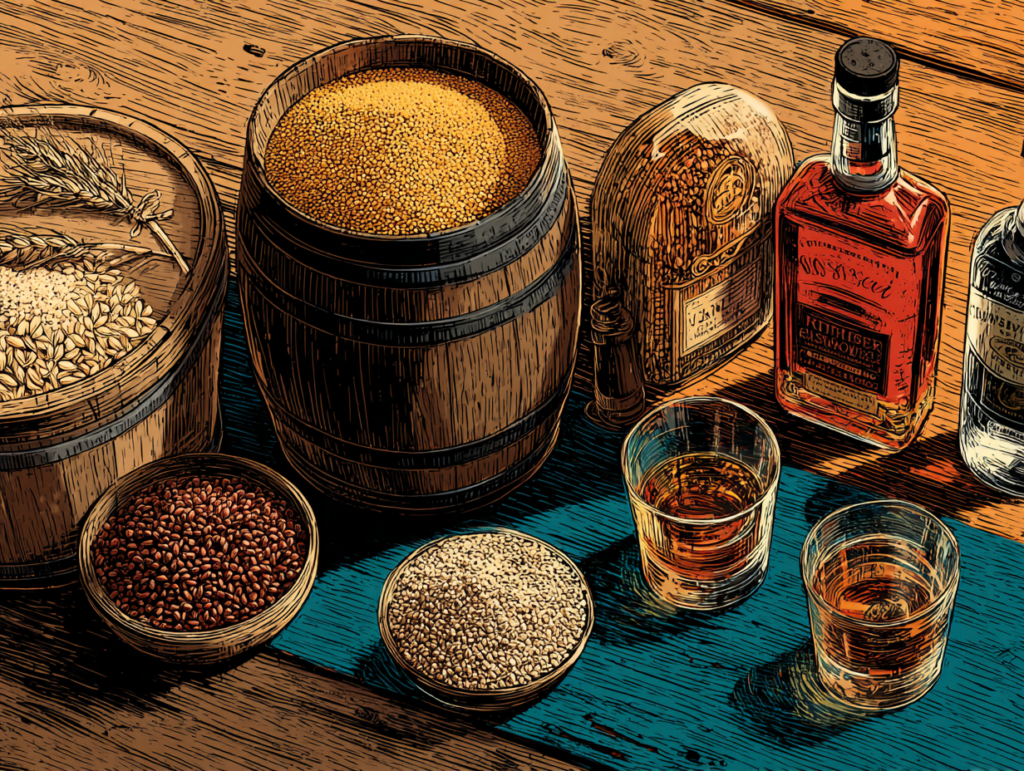
A true American spirit, Bourbon must be made in the United States (mostly Kentucky) and contain at least 51% corn. It’s aged in new charred oak barrels, which gives it a sweeter, fuller flavor.
- Flavor notes: Vanilla, caramel, oak, and spice.
- Legal requirements: No additives allowed, distilled to no more than 160 proof, aged in new oak.
- Famous brands: Maker’s Mark, Woodford Reserve, Jim Beam, Wild Turkey.
Irish Whiskey
Distilled in Ireland, this style is typically triple-distilled for smoothness and made from a mix of malted and unmalted barley. It’s aged for at least three years in wooden casks and is known for its soft, approachable character.
- Flavor notes: Honey, vanilla, light spice, and fruit.
- Texture: Creamy, mellow, and smooth — ideal for new whiskey drinkers.
- Famous brands: Jameson, Bushmills, Tullamore D.E.W.
Key Production Differences
To truly grasp the contrast between Scotch, Bourbon, and Irish whiskey, it’s essential to look at their ingredients, distillation, and aging methods.
| Feature | Scotch | Bourbon | Irish Whiskey |
|---|---|---|---|
| Grain Base | Malted barley | At least 51% corn | Malted + unmalted barley |
| Distillation | Usually twice | Usually twice | Typically triple-distilled |
| Aging Casks | Used oak barrels | New charred oak barrels | Used barrels (often ex-Bourbon) |
| Minimum Aging | 3 years | No legal minimum (often 2+) | 3 years |
| Region of Origin | Scotland | United States | Ireland |
| Taste Profile | Smoky, robust | Sweet, bold | Smooth, light |
Why It Matters
The type of grain and barrel determines flavor intensity. Bourbon’s corn base makes it sweeter; Scotch’s peat smoke gives it depth; Irish whiskey’s triple distillation ensures a gentle, silky finish.
How to Choose the Right One for Your Taste
Each whiskey offers a distinct experience, so your choice depends on what kind of flavors you enjoy.
If You Like Sweet and Smooth
Go for Bourbon. Its caramel and vanilla notes come from the charred new oak barrels. Perfect for sipping neat or in cocktails like an Old Fashioned or Manhattan.
If You Prefer Smoky and Complex
Choose Scotch, especially from Islay or Highlands regions. It’s best appreciated neat or with a drop of water to open up the aroma.
If You Want Light and Mellow
Pick Irish whiskey. Its creamy, easy-drinking texture makes it a great beginner’s whiskey or a versatile cocktail base (think Irish Coffee or Whiskey Sour).
💡 Tip: For a smoother introduction, start with Irish whiskey; for a bold, full-bodied drink, Bourbon is your best bet; and for depth and tradition, nothing beats Scotch.
Aging and Flavor Differences
Aging plays a major role in shaping the taste and texture of Scotch, Bourbon, and Irish whiskey. The barrel type, climate, and length of maturation each leave their mark on the final spirit.
How Scotch Ages
Scotch ages slowly in the cool, damp climate of Scotland. The use of used oak barrels (often ex-Bourbon or Sherry casks) allows subtle flavors to develop over time.
- Flavor outcome: Deep, smoky, woody notes with hints of dried fruit, spice, and peat.
- Typical age range: 8 to 25 years or more.
- Older Scotch tends to be smoother, but also more complex and expensive.
How Bourbon Ages
Bourbon matures faster due to warmer American climates and the use of new charred oak barrels. The char layer caramelizes the natural sugars in the wood, giving Bourbon its signature sweetness.
- Flavor outcome: Sweet vanilla, caramel, toasted oak, and spice.
- Typical age range: 4 to 10 years.
- Even younger Bourbons (around 4 years) can be rich and flavorful thanks to the intense barrel influence.
How Irish Whiskey Ages
Ireland’s moderate climate allows whiskey to age gently, resulting in lighter, cleaner flavors. Aging in used Bourbon or Sherry casks adds complexity without heaviness.
- Flavor outcome: Honey, citrus, vanilla, and floral tones.
- Typical age range: 3 to 12 years.
- Triple distillation keeps it smooth even at a younger age.
💡 Quick note: Scotch is known for smoke, Bourbon for sweetness, and Irish whiskey for smoothness — three expressions of craft shaped by time and place.
Smoothness and Drinkability
One of the most common questions among whiskey lovers is: Which is smoother — Scotch, Bourbon, or Irish whiskey?
Scotch
Scotch’s boldness and smokiness make it less “smooth” to beginners but deeply rewarding to those who appreciate complex flavors.
- Smoothest types: Speyside or Lowland Scotches like Glenlivet or Glenkinchie.
- Serving tip: Add a few drops of water to mellow the peat and open up the aroma.
Bourbon
Bourbon’s natural sweetness and lower peat content make it smooth and approachable for most palates.
- Smoothest types: Maker’s Mark, Woodford Reserve, Buffalo Trace.
- Serving tip: Best served neat or with one large ice cube to preserve flavor.
Irish Whiskey
Irish whiskey is considered the smoothest of all, thanks to its triple distillation and light, fruity flavor. It glides easily on the palate with no harshness.
- Smoothest types: Jameson Black Barrel, Redbreast 12, Tullamore D.E.W.
- Serving tip: Ideal neat, in cocktails, or even with coffee for a classic Irish Coffee.
🥃 Verdict: Irish whiskey wins for smoothness, Bourbon for richness, and Scotch for depth and complexity.
Cultural Origins and Traditions
Behind every whiskey style lies centuries of heritage and craftsmanship that shape its identity.
Scotland: The Birthplace of Whisky
Scotch is more than a drink — it’s a national treasure. Each region (Islay, Speyside, Highlands, Lowlands, Campbeltown) has its signature taste. Distilleries often maintain centuries-old traditions, emphasizing quality and regional pride.
- Tradition: Distilled in copper pot stills, often aged in used Sherry or Bourbon casks.
- Character: Deep, smoky, and bold — a true reflection of rugged Scottish landscapes.
The United States: Bourbon’s Sweet Legacy
Bourbon is rooted in early American history, especially Kentucky. The abundance of corn and oak led to the perfect blend of sweet grain and charred barrel aging.
- Tradition: Every Bourbon must be made with at least 51% corn and aged in new charred oak barrels.
- Character: Sweet, warm, and full-bodied — often tied to Southern hospitality and craftsmanship.
Ireland: The Rebirth of Smooth Whiskey
Irish whiskey once dominated the global market before nearly disappearing in the early 20th century. Its revival in recent decades has reestablished Ireland as a whiskey powerhouse.
- Tradition: Triple-distilled for smoothness and often blended for balance.
- Character: Friendly, creamy, and easy to drink — a perfect introduction for new whiskey enthusiasts.
☘️ Fun fact: The word “whiskey” comes from the Irish phrase uisce beatha, meaning “water of life.”
How to Drink and Enjoy Each Whiskey Type
Every whiskey deserves to be appreciated in its best form. Knowing how to serve and taste them can dramatically improve your experience.
Scotch Whisky
- Best served: Neat or with a few drops of water to open its aroma.
- Ideal glass: Glencairn or tulip glass to capture the aroma.
- Pairing tips: Enjoy with dark chocolate, smoked meats, or strong cheeses.
- Pro tip: Avoid chilling Scotch too much; the cold can dull its complex flavors.
Bourbon Whiskey
- Best served: Neat, on the rocks, or in classic cocktails like an Old Fashioned or Mint Julep.
- Ideal glass: Short tumbler or rocks glass.
- Pairing tips: Complements grilled meats, pecan pie, or caramel desserts.
- Pro tip: A splash of water can help soften the alcohol and enhance its sweetness.
Irish Whiskey
- Best served: Neat or mixed — versatile for cocktails like Irish Coffee or Whiskey Sour.
- Ideal glass: Tumbler or highball for mixed drinks.
- Pairing tips: Pairs beautifully with seafood, roasted chicken, or apple desserts.
- Pro tip: Perfect for beginners thanks to its mellow, smooth character.
🥃 Rule of thumb: Neat for depth, ice for smoothness, cocktails for fun — choose the experience that fits your mood.
How to Identify Quality Whiskey
Before you buy, here’s how to tell if your Scotch, Bourbon, or Irish whiskey is worth the price tag:
- Check the Label:
- Scotch should list its region (Highland, Islay, etc.).
- Bourbon must say “straight” to confirm it’s genuine and aged at least 2 years.
- Irish whiskey should specify “triple distilled.”
- Examine the Color:
- Dark amber tones suggest longer aging or new oak barrels.
- Lighter golden hues often indicate younger or used-cask aging.
- Smell Before You Sip:
Swirl the glass gently and inhale — you should pick up layered aromas like oak, caramel, spice, or fruit. Harsh, overly alcoholic notes often mean poor blending or young age. - Taste for Balance:
Quality whiskey delivers harmony between sweetness, spice, and warmth — no single flavor should dominate.
💡 Pro Tip: Price doesn’t always equal quality. A well-aged blended Scotch or small-batch Bourbon can outperform many expensive labels.
FAQs About Scotch, Bourbon, and Irish Whiskey
1. What is the difference between Scotch, Bourbon, and Irish whiskey?
Scotch is made from malted barley in Scotland and often tastes smoky. Bourbon is made from corn in the U.S. and is sweeter, while Irish whiskey is triple-distilled in Ireland and known for its smoothness.
2. Which one is better, Scotch or Irish whiskey?
It depends on taste — Scotch is bolder and smoky, while Irish whiskey is softer and creamier. Beginners often prefer Irish whiskey for its mild profile.
3. What tastes better: whiskey, Bourbon, or Scotch?
“Better” is subjective. Bourbon is sweet and full-bodied, Scotch is rich and smoky, and Irish whiskey is smooth and light.
4. What is smoother, Bourbon or Irish whiskey?
Irish whiskey is generally smoother because of triple distillation, while Bourbon is richer and more robust.
5. What’s the difference between Scotch and Bourbon?
Scotch uses malted barley and is aged in used barrels; Bourbon uses at least 51% corn and new charred oak barrels, giving it a sweeter taste.
6. Why is Jack Daniel’s not Bourbon?
Jack Daniel’s is technically Tennessee whiskey, which undergoes the Lincoln County Process — filtering through charcoal before aging, making it smoother than typical Bourbon.
7. What are the five types of whiskey?
- Scotch Whisky
- Irish Whiskey
- Bourbon Whiskey
- Rye Whiskey
- Canadian Whisky
8. What is the difference between Irish and Scottish?
Irish whiskey is triple-distilled and light, while Scotch is double-distilled and often smoky due to peat. The Irish spelling uses an “e” — whiskey — while the Scots spell it whisky.
Conclusion: Choosing Your Perfect Pour
When comparing Scotch vs Bourbon vs Irish whiskey, the best choice depends on your personal taste.
- Choose Scotch if you enjoy deep, smoky complexity.
- Choose Bourbon if you like sweet, rich, caramel notes.
- Choose Irish whiskey if you prefer smooth, easy drinking.
Each style tells a story — of land, tradition, and craftsmanship. Whether you sip it neat, mix it in a cocktail, or share it with friends, whiskey remains more than a drink — it’s an experience in a glass.
🥃 Learn more about whiskey pairings and serving tips at Belicimo.com.
- Learn more about Sweet vs Dry Wine: How to Tell
- Discover Sparkling Wine: What to Buy and Why
- Explore How to Serve Wine and Whiskey Properly
- Read about Affordable European Spirits Worth Trying
Would you like me to now generate the next article (new keyword topic) — or format this one into HTML ready for Rank Math + WordPress upload?